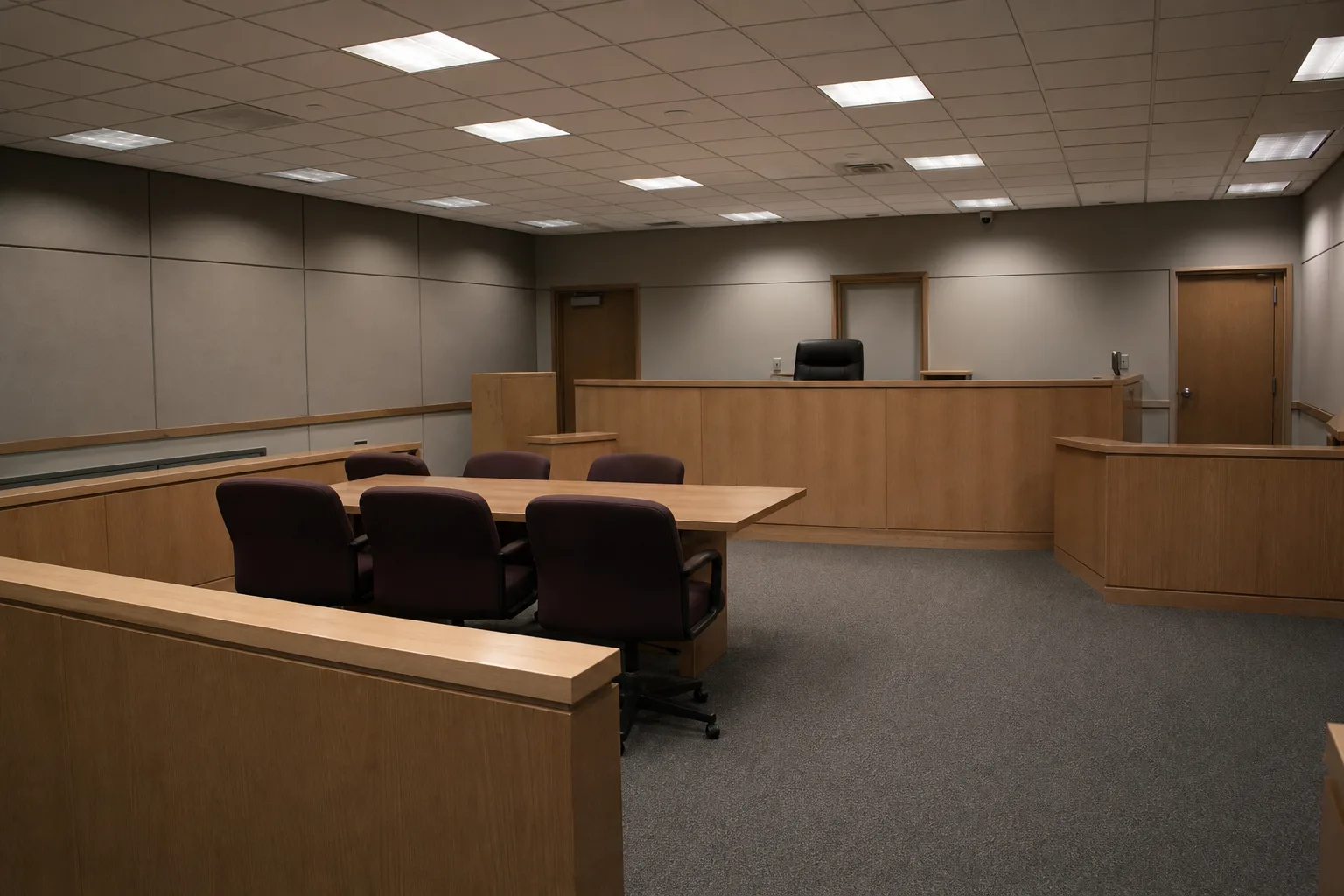
One person's working-out of how impaired driving charges move through Washington courts, written down so the next person can ask better questions before hiring anyone.
The paperwork you leave the station with is doing two jobs at once, and most people only notice the first. One sheet tells you when to appear in district or municipal court. Another tells you the state intends to suspend your driving privilege, and that the notice itself works as a temporary permit for a fixed stretch of days. Those are not two halves of the same proceeding. They are separate cases, in separate forums, decided by different people applying different standards, and the decision about how to handle each one carries its own price tag.
Two forums, two questions, two burdens
The criminal case lives in a district court or a municipal court, depending on whether a city police department or a county deputy made the stop, and it asks whether the state can prove impaired driving beyond a reasonable doubt to a jury. The administrative case lives at the Department of Licensing, is decided by a hearing officer rather than a judge, and asks a much narrower set of questions under a much lower standard: more likely than not. That gap matters in practice. A case that a prosecutor cannot win in front of a jury can still cost you the license, because the license question is smaller, cheaper for the state to prove, and answered first.
The narrowness cuts both ways. A hearing officer will not weigh whether you were generally driving safely; the issues are bounded, covering things like whether the officer had reason to make the stop and the arrest, whether the implied consent warnings were given correctly, and whether a breath or blood result or a refusal is properly documented. Those are technical questions with technical answers, and they are answered on paper and by testimony from the officer, not by your account of the evening. Winning one is a document-and-procedure exercise, which is exactly why the work is priced differently from the criminal defense.
The first month on the criminal side
Arraignment usually comes within a couple of weeks of arrest if you were released, and much faster if you were held. You enter a not guilty plea, the court sets conditions of release, and those conditions are the part people underestimate. A judge can order no driving without a valid license and insurance, no alcohol, an ignition interlock device, and sometimes an alcohol monitoring bracelet, all before anyone has proved anything. Interlock installation, monthly calibration, and monitoring fees are real money leaving your account every month the case is open, so the length of the case is itself a cost.
After arraignment the case settles into a rhythm of pretrial hearings set roughly a month apart while discovery arrives and gets reviewed. This is where hiring a DUI Lawyer in Seattle stops being an abstraction and starts being a series of concrete tasks: requesting the full file, checking the breath test machine's maintenance and certification records, watching the in-car and body camera video against the officer's narrative, and deciding whether a suppression motion is worth filing. Most flat fee quotes cover this stretch. Read carefully whether they also cover trial.
The first month on the license side
The Department of Licensing clock is the shorter one and it does not wait for the court. You have to affirmatively request a hearing within a window measured in days from the arrest, pay the filing fee, and get the request in correctly, or the suspension takes effect by default with no hearing at all. Nobody calls to remind you. The court will not do it for you, and a lawyer you hire in week three cannot retroactively create a deadline you already missed. This is the single most common expensive mistake in the first month, and it is entirely avoidable.
If the request goes in on time, the hearing is typically held by telephone some weeks later, with a hearing officer, the arresting officer's sworn report, and whatever records your attorney has subpoenaed. It is short. It is also the earliest look you get at how the state's version of the arrest holds together, which has value in the criminal case even when the license result goes against you. Impaired driving enforcement standards, including the standardized field sobriety tests officers are trained to administer, fall under the National Highway Traffic Safety Administration, and deviations from that training are frequently where both cases turn.
What the split actually costs you
Price the two cases separately, because that is how most defense firms bill them. A flat fee for the criminal case commonly covers arraignment through pretrial and negotiation, with trial priced as a separate stage or a separate agreement. The Department of Licensing hearing is often quoted as its own line item, a few hundred to a couple thousand dollars depending on the firm, and some quotes bundle it while others do not. Ask which, in writing, before you pay. The cost of skipping the hearing is not the fee you saved: it is months of suspension, interlock installation, high risk insurance filing, and the commute you now have to solve.
Handled together, the two cases feed each other. The license hearing surfaces the officer's report and testimony early, the criminal discovery fills in the video and the machine records, and decisions in one inform strategy in the other. Knowing the split exists, on day one, is what buys you the time to make those decisions deliberately rather than under a deadline you found out about too late.